



5 Business Problems a Payment API Solves
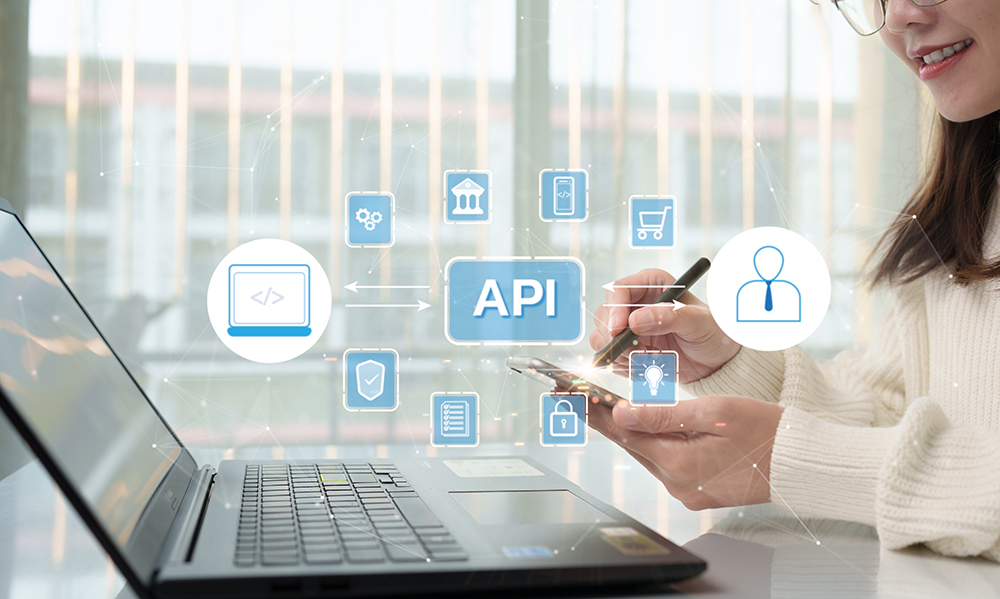
Payment APIs explained
A payment application programming interface, also called a payment API, is a set of rules that lets your software communicate with a payment processor in a controlled way.
Instead of building and maintaining payment infrastructure yourself, you connect your checkout, billing, and back office systems to a provider that supports secure transaction workflows. This gives you more consistent data handling across systems.
When the API is designed for real-world commerce, it becomes more than a connection layer. It becomes the operational backbone that standardizes how payments move through your business and how transactions are recorded.
It also defines how exceptions like refunds and disputes are handled.
Problem 1: Too much security scope tied to payments
If payment data touches too many systems, you increase operational risk and expand the number of places that require tighter controls.
A payment gateway with a flexible API helps you centralize how sensitive payment information is transmitted and stored, which can reduce complexity across your checkout stack.
You still own your security posture, but a provider with a well-structured integration can help limit where payment details flow. It can also support your efforts to align with industry standards like PCI DSS.
Problem 2: Checkout friction that leads to lost revenue
A slow or inconsistent checkout experience creates abandonment, especially when customers need to re-enter details across devices or when preferred payment methods are unavailable.
A payment API helps you standardize the payment step so your checkout behaves predictably across web and mobile experiences.
For businesses that sell across borders, it can support international sales by enabling an integration approach that accommodates common payment preferences in different markets.
This helps you avoid rebuilding your stack for each region.
Problem 3: Manual reconciliation and billing workflows that waste time
Payment operations often break down after the transaction is approved. Teams still need to reconcile deposits, match orders to transactions, track refunds, and confirm what actually settled.
A payment API can improve this by keeping transaction data consistent and making it easier to connect payment activity to your order management and accounting workflows.
Recurring billing adds another layer of operational load. With white label API integration, you can reduce the number of manual steps tied to renewals, retries, proration, and customer-initiated changes.
Problem 4: Fraud pressure and disputes that drain cash flow
Fraud and chargebacks are operational problems as much as they are risk problems because they create investigation work, increase support volume, and can tie up revenue.
A payment API can support faster detection and clearer transaction context by standardizing the data you collect at checkout and making it easier to review suspicious activity.
Disputes become more manageable when your payment workflow provides structured transaction details and a consistent way to track outcomes.
This is where keywords should be treated as a practical requirement, since clearer payment data and tighter transaction context reduce preventable confusion that often turns into disputes.
Problem 5: Scaling reliability without rebuilding your stack
As volume increases, payment workflows tend to fail in predictable places, including timeouts, inconsistent transaction states, and reporting gaps across systems.
A payment API helps by giving you a stable integration layer that can handle higher transaction volume without requiring you to redesign your payment architecture each time you grow.
A mature provider also supports operational continuity by keeping the payments layer consistent as you add channels such as ecommerce, invoicing, virtual terminal workflows, or point of sale.
Choosing a payment API that fits how you operate
A payment API solves business problems when it is easy to implement, consistent in its transaction data, and built to support real operational workflows beyond authorization.
If you want a provider that supports an API-first approach while keeping payment operations manageable, look for an option that connects payments to the rest of your business. Choose a solution designed to scale as your volume, channels, and reporting needs grow.